一个地点,决定你该用 Leave 还是 Forget
(本文解决:中文母语者表达"我把东西忘在某处"时 leave / forget 混用的典型中式英语错误)
你是不是也经常脱口而出 "I forgot my wallet at home"?虽然对方能听懂,但这在母语者听来是一个非常典型的 Chinglish 误区。今天一次性帮你彻底分清 Leave 和 Forget 的使用边界!
你是不是也有这些困惑:leave 和 forget 有什么区别?"忘在家里"用英语怎么说?I forgot my wallet at home 对吗?"丢三落四"用英语怎么说?slip my mind 是什么意思?如果你正在寻找答案,这篇就是你需要的。
✍️ 本文由 Aice 英语学习团队编写 · 上海氦铂网络科技有限公司 · 2026-07-29 · 适合 CEFR A2–B1 水平学习者
🎯 核心知识点:Leave 与 Forget 的本质区别
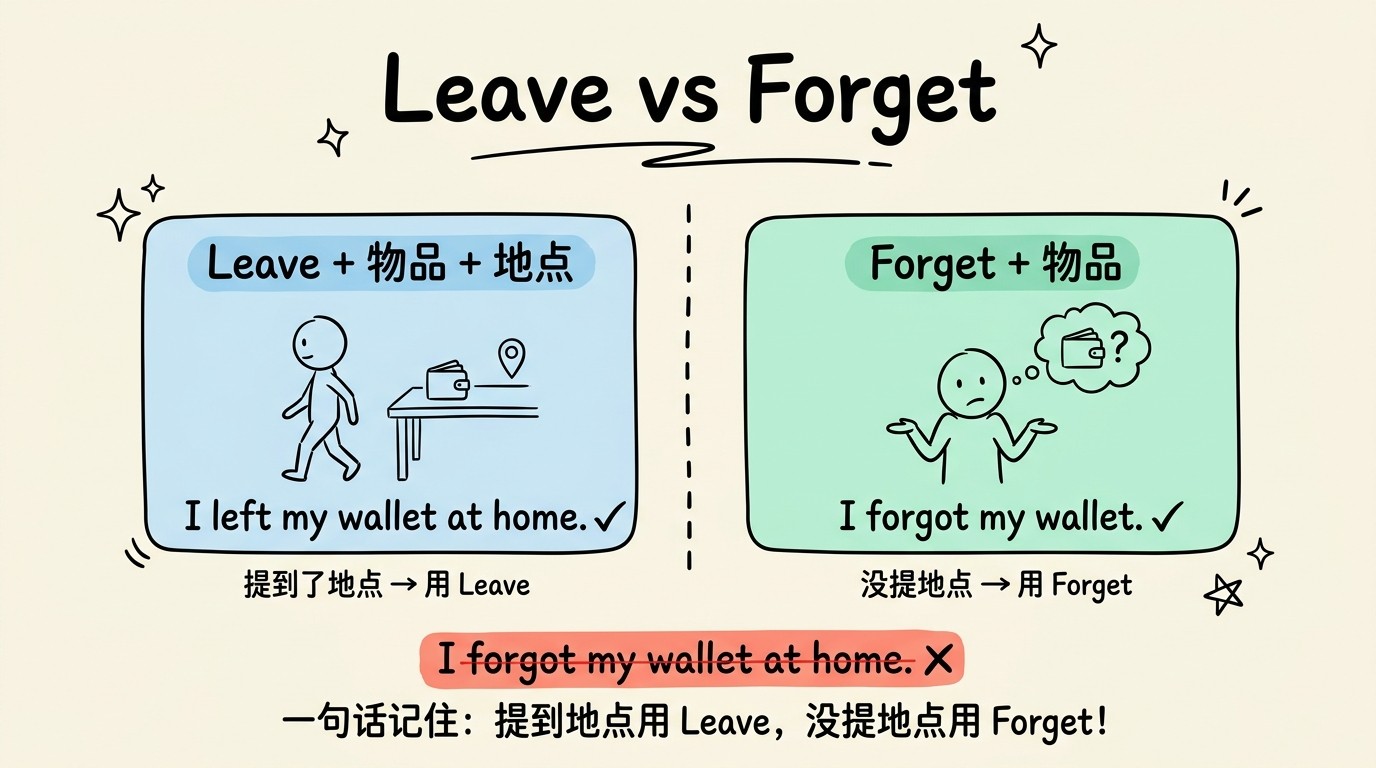
简单来说:"地点"是区分这两个词的关键!当你明确提到"留在什么地方"时,必须使用 Leave;当你只是说"忘了带",不提地点,才用 Forget。
✅ Leave:遗留在某个具体地点
🔑 Leave + 物品 + 地点当你明确提到"留在什么地方"时,必须使用 Leave(过去式为 Left),因为 Forget 后面不能直接接表示位置的介词短语(如 at home, in the car)。
🌰 I left my wallet at home.(我把钱包忘在家里了。)
🌰 I left my sunglasses in the car.(我把太阳镜忘在车里了。)
🌰 I always leave my keys on my desk.(我总是把钥匙留在桌子上。)
✅ Forget:单纯忘记带某物(不提地点)
🔑 Forget + 物品当你只想表达"我忘了带某样东西",而不需要/不强调具体地点时,才使用 Forget(过去式为 Forgot)。
🌰 I forgot my wallet.(我忘记带钱包了。)
🌰 Oh no, I forgot my keys!(糟糕,我忘了带钥匙!)
💡 一句话记忆法则:提到了地点用 Leave,没提地点用 Forget!
永远记住:❌ I forgot my wallet at home → ✅ I left my wallet at home
🎬 想看更直观的视频讲解?点击观看 Leave vs Forget 教学视频:
📺 视频号讲解🔥 6个地道母语者表达(提升口语高级感)
除了 Leave 和 Forget,Native Speaker 在表达"健忘"、"找不到东西"或"匆忙遗忘"时,还会使用以下6个地道表达。学起来,让你的英语立刻脱颖而出!
🏆 黄金实战公式(Bonus!)
当你因为忘记带东西(如电脑、文件、门卡)而导致迟到,需要向同事/朋友解释并提供解决方案时,直接套用这个无敌公式!
场景:你因为忘带笔记本电脑而迟到了几分钟
🌟 示范回答
"Sorry I'm a bit late! I was running out the door this morning and realized I left my laptop on the kitchen counter. It completely slipped my mind because I was in such a rush. Luckily, I managed to grab a cab back to get it, so we can start the meeting right now."
📝 中文翻译:"抱歉我晚了一会儿!今天早上我急着出门,结果发现把电脑忘在厨房台面上了。因为实在太赶了,我完全给忘了。幸好我及时打车回去拿到了,我们现在可以马上开始开会了。"
💡 公式解析:
· 第一步(致歉/引出):Sorry I'm a bit late! 迅速建立友好、有礼貌的沟通基调。
· 第二步(地道语法点):使用 left my laptop on...(而不是 forgot),搭配 running out the door 说明背景,语法极其地道。
· 第三步(地道表达加分):用 slipped my mind 替换普通的 I forgot,展现更高的词汇丰富度。
· 第四步(展现解决能力):Luckily, I managed to... 说明问题已解决,职场成熟度拉满!
💡 进阶避坑:Bring 和 Take 混用
Bring 指从别处带到说话者所在的地方(Come here and bring it)。
Take 指从说话者的地方带到别的地方去(Take it away)。
❌ Can you take me that book?(如果你在对方面前)
✅ Can you bring me that book?
这也是中文母语者常犯的"方向性"错误,和 Leave/Forget 一样值得注意!
🗣️ 发音密码(Pronunciation Tips)
当你发 "left my" 时,中间的 /t/ 音在快速口语中往往不需要清晰爆破,而是采用假吞音/失爆(Unreleased T)的形式:
left my 读作 /lef-maɪ/
舌尖顶住上齿龈但不送气,直接过渡到 /m/ 的发音
forgot my 读作 /fəˈɡɒt-maɪ/
同理,t 音不爆破直接连 m
💡 掌握这个连读技巧,你的 "I left my wallet at home" 会听起来自然顺畅很多!现在试着大声读出来!
🧩 来个小测试,看看你掌握了没有
你想说"我把手机忘在出租车里了",以下哪种表达正确?
A. "I forgot my phone in the taxi." B. "I left my phone in the taxi." C. "I missed my phone in the taxi."
✅ 答案:B — "I left my phone in the taxi." 提到了具体地点(in the taxi),必须用 leave。
你急着出门,发现没带钥匙,你说:
A. "Oh no, I left my keys!" B. "Oh no, I forgot my keys!" C. "Oh no, I missed my keys!"
✅ 答案:B — "Oh no, I forgot my keys!" 没有提到具体地点,所以用 forget。
你想礼貌地解释自己忘了带文件,哪种说法最地道?
A. "I forgot to bring it." B. "It slipped my mind." C. 两者都可以
✅ 答案:C — 两者都正确,但 "It slipped my mind" 更地道、更礼貌,是 Native Speaker 更常用的表达。
"我最近总是丢三落四的"用英语怎么说?
A. "I've been so forgetful lately." B. "I've been so scatterbrained lately." C. 两者都可以
✅ 答案:C — 两者都正确,但 "scatterbrained" 更形象生动,口语中更有表现力。
✨ 简单小结
| 表达/词汇 | 意思 | 使用场景 |
|---|---|---|
| leave + 物 + 地点 | 把某物遗留在某处 | 提到了具体地点时必须用 |
| forget + 物 | 忘记带某物 | 不提具体地点时使用 |
| slip one's mind | 一时忘记 | 礼貌解释为什么忘了 |
| misplace | 随手乱放找不到 | 东西没真丢,只是忘了放哪 |
| scatterbrained | 丢三落四的 | 自嘲/形容人健忘 |
| absent-minded | 心不在焉的 | 因走神导致疏忽 |
| on the tip of my tongue | 就在嘴边想不起来 | 想说某个词/名字时卡壳 |
| run out the door | 匆忙出门 | 解释遗忘物品的原因 |
掌握这些地道表达,下次再遇到"忘带东西"的情况,你的英语一定能让母语者刮目相看!💪
收藏这篇指南,从此告别 "I forgot my wallet at home" 的中式英语!🌟
常见问题解答
Q: 把东西忘在家里用英语怎么说?
一句话答案:用 I left my [物品] at home。当句子中提到了具体地点时必须使用 leave(过去式 left),不能用 forget。例如:I left my wallet at home.(我把钱包忘在家里了。)
Q: Leave 和 Forget 有什么区别?
一句话答案:核心区别在于是否提到地点。提到了地点用 Leave(如 I left my keys in the car),没提地点用 Forget(如 I forgot my keys)。Forget 后面不能直接接地点介词短语。
Q: I forgot my wallet at home 这句话对吗?
一句话答案:这是典型的中式英语错误。正确说法是 I left my wallet at home。当句子中包含地点(at home, in the car, on the desk 等)时,必须使用 leave。
Q: slip my mind 是什么意思?
一句话答案:slip one's mind 意为"一时忘记,遗忘",是比 I forgot 更礼貌、更地道的表达。例如:It completely slipped my mind to bring the document.(我完全忘了把文件带过来了。)
Q: 丢三落四用英语怎么说?
一句话答案:用 scatterbrained(注意力不集中的,丢三落四的)或 absent-minded(心不在焉的,健忘的)。例如:I've been so scatterbrained lately.(我最近总是丢三落四的。)
Q: misplace 和 lose 有什么区别?
一句话答案:misplace 指"随手乱放导致一时找不到"(东西还在),lose 指"真正丢失了"。如果你相信东西还在某处只是找不到,用 misplace 更准确。
Q: on the tip of my tongue 是什么意思?
一句话答案:意为"就在嘴边,一时想不起来"。当你想说某个词或名字但一时卡壳时使用。例如:Her name is on the tip of my tongue, but I just can't remember it!(她的名字就在我嘴边,但就是想不起来!)
📖 本文适用场景:雅思口语/托福口语备考(描述日常生活事件)、职场迟到解释、日常社交中表达健忘/遗忘、纠正 "I forgot at home" 中式英语错误、想了解 leave 和 forget 区别的中文母语英语学习者。